Trolling by Design

Trolling by Design

Sorry to break it to you, game makers, but most player trolling is your fault. It's an indicator of bad game design, and it's your responsibility to address it.

Trolling, meaning intentionally disruptive or provocative behavior intended to upset others, is a common problem in multiplayer games. This can include harassment, like annoying other players with repeated physical or verbal attacks, or more elaborate stunts like griefing, where a player intentionally sabotages another player without competitive purpose. Trolling is often seen as something players do out of maliciousness, or because they're bad actors. But, in my experience, the vast majority of people we call trolls don't go into a game intending to be one (there are exceptions, of course). Rather, they expected to play the game like everyone else, but turned to trolling to have fun or to get a reaction from others.

Wait a minute! Fun and interaction are exactly what a good multiplayer game is supposed to deliver! So, when players turn to trolling, that means they can't find those things in the game. They're essentially telling the game designer, "It's more fun to misbehave than to play this game as intended." And that's on you.

So how do you address trolling through design?

1. Make Fun Accessible

First, ensure that your game makes having fun easy—a challenge, I know. Minimize moments when players are unsure of what to do next, wandering around looking for something fun. Those periods of confusion and frustration are often when the lizard brain heuristics kick in. If a player doesn't understand how to have fun through the game's systems, they default to what they do know offers them excitement and attention: causing chaos.

This is one reason we frequently see trolling in pre-game lobbies. Here, players wait for the game to start without a clear goal or method of interacting. It's no wonder they try to provoke a reaction, for instance, by saying offensive words. It's an easy way to stand out and get a rise out of people. In Fortnite, players in these waiting areas have access to their weapons, (though they do no damage), so many resort to harassing others with repeated attacks. These players aren't bad necessarily. They are just bored and trying to find entertainment where there is none.

Good instructions are also essential. Even when players have a clear goal of what they're supposed to do, not knowing how to interact with the world to achieve that goal can be frustrating. Imagine a game with three main mechanics: an attack (shooting a laser), a movement option (a grappling hook), and a puzzle interaction (moving and rotating blocks). If players can't figure out how to grapple to the next puzzle, or how to engage with that puzzle, they will likely resort to the easiest option -- repeatedly shooting others to find some form of entertainment.

To reduce these situations, designers should provide moment-to-moment goals, clear instructions on how to approach them, and a smooth game flow for moving between goals. Players need to intuit the best way to have fun at any given moment. When players know how to enjoy themselves in ways that align with the game's design, they are less likely to default to disruptive behaviors contrary to that design.

2. Reduce the Opportunities for Trolling

Second, limit how players can troll. This isn't just about mitigating damage after the fact; it starts with the design of the game world and its mechanics. Players enter a game world with one question: "What am I supposed to do here?" Their answer may be taken from tutorials or instructions—but it's also based on what they actually CAN do.

If you make it possible for players to run up to someone and blast them in the face 50 times, that's a signal that such behavior is an acceptable way to play. Build in natural buffers that prevent trolling behaviors from being seen as viable or enticing. Cooldowns, reload times, and safe zones are tools that can set boundaries on disruptive behavior. Cooldowns and reload times slow down the pace of aggressive actions, preventing players from overwhelming others. Safe zones provide spaces where players can regroup and feel secure, especially at respawn points. There's nothing more disorienting than spawning into a game, trying to get your bearings, only to be instantly attacked. And remember, in all probability, that attacker is not just being mean—they might have been bored and waiting for another player to join. This suggests yet another strategy for reducing trolling: giving players options for solo fun, so they don't pounce on newcomers.

Designing moments of pause, restricting, and redirecting inappropriate interactions can provide necessary space and help shape player actions, as well as their expectations.

Conclusion

Trolling isn't the inherent aim of most players. It's often a symptom of poor game design. Trolling happens when players decide that it's the easiest way to have fun in the game. To reduce trolling, make sure that your game delivers obvious pathways to fun, and limits the opportunities for players to engage in disruptive behaviors. Design your map and interactive mechanics so that players can answer the question, "How do I have fun here?" with something more productive than causing trouble for others.

All players want to have fun. Design a place where it's more fun to behave, and they'll be less likely to misbehave.
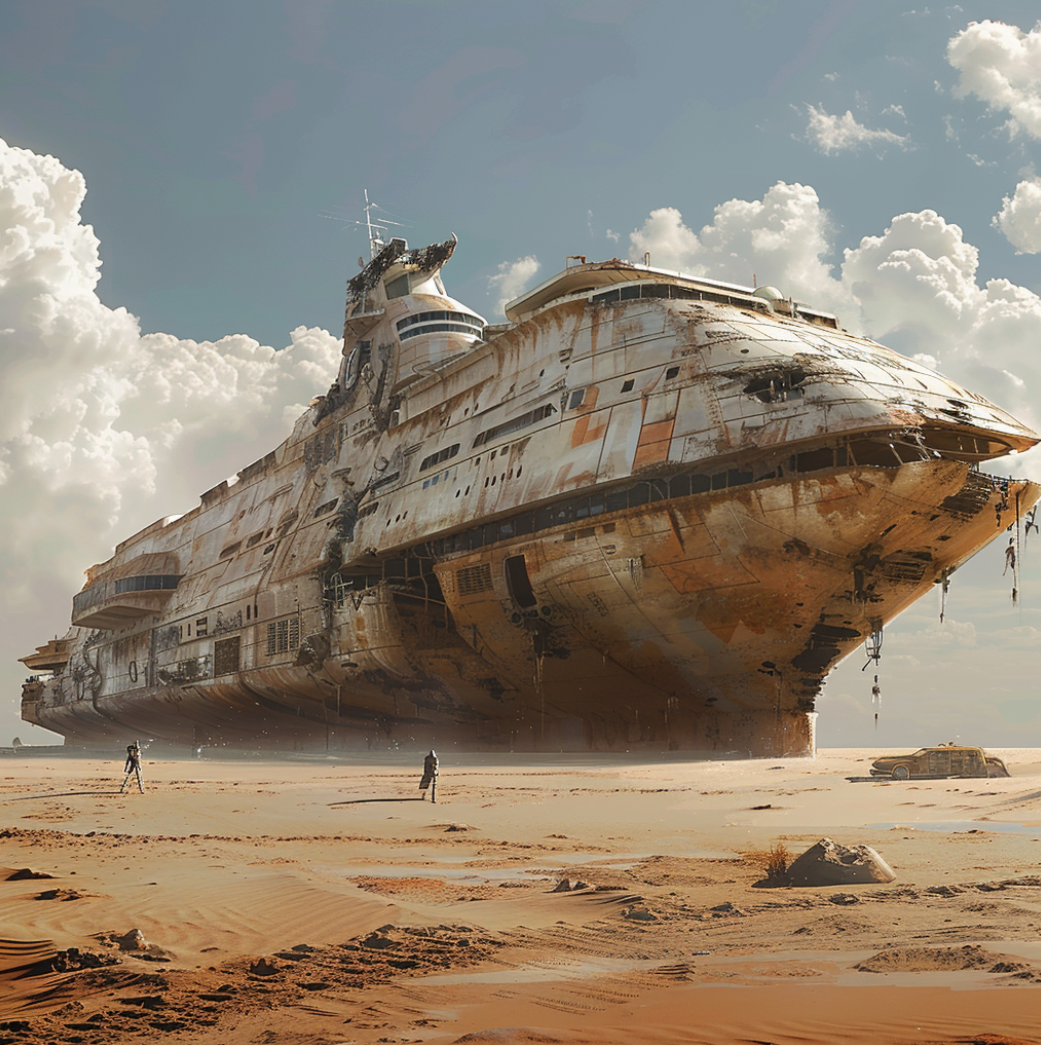
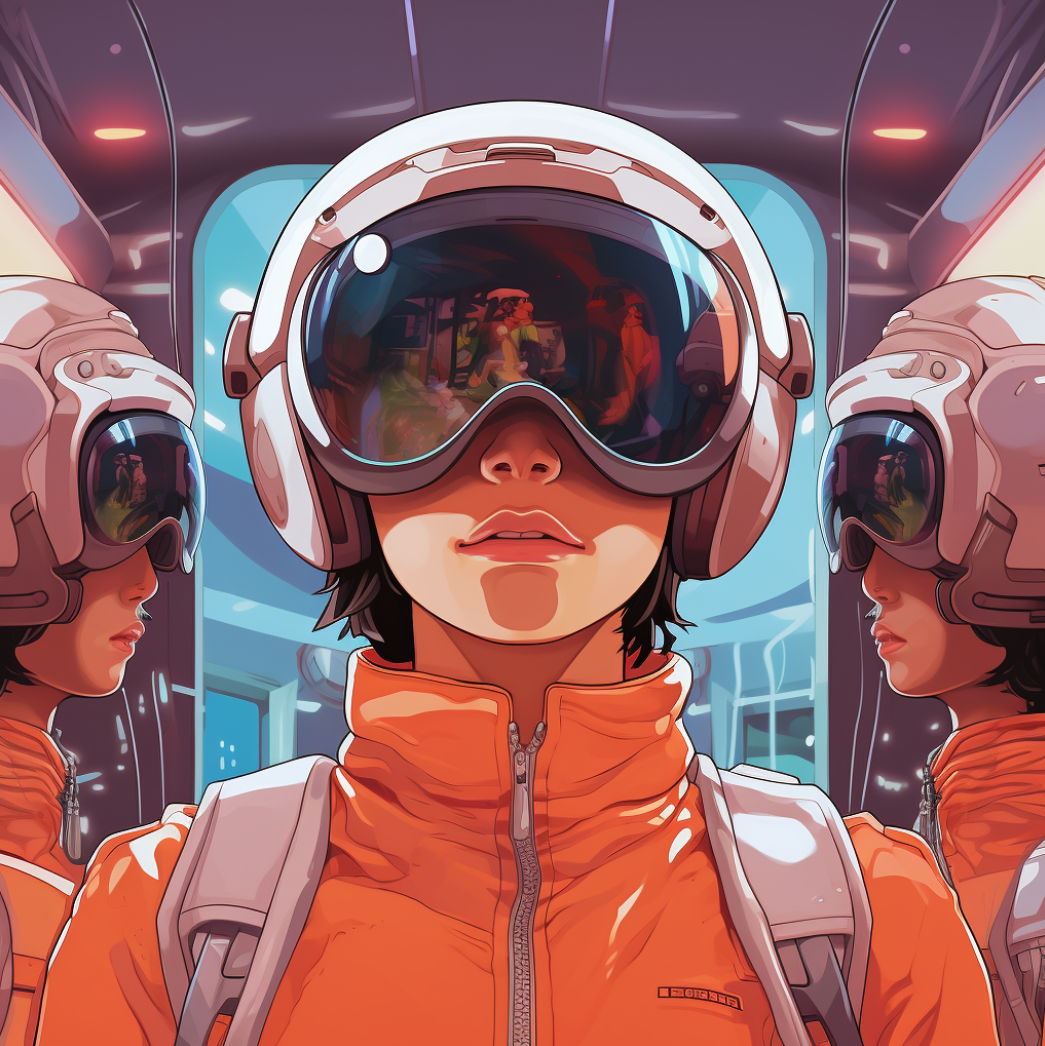
Disney Starcruiser

What Disney's Disastrous Galactic Starcruiser Can Teach VR Creators

From theme parks to VR games, consumer experiences often tout "immersion" as a major, if not the major selling point. These experiences promise intricate fantasy worlds that make visitors feel like they're "really there." But immersion can be hard to achieve and easy to break.

The slipperiness of immersion is chronicled meticulously in Jenny Nicholson's recent video essay about the failure of Disney's Star Wars Galactic Starcruiser hotel. VR creators should take note! After all, with the Galactic Starcruiser, Disney expended enormous resources to create its own "virtual reality": a fantastical setting for role play (albeit physically rather than digitally, and enclosed in a building rather than a headset).

So what can the shortcomings of Disney's effort teach us, and how can we apply those lessons to VR?

What is Immersion?

Generally speaking, immersion is a quality of an experience that allows you to become fully absorbed, making it richer and more emotionally resonant. It can also be put in terms of escapism: the real world fades away, and you feel like you're transported somewhere extraordinary.

It's worth underlining that immersion is a characteristic of an experience, and not the experience itself. An immersive theme-hotel still needs comfy rooms. An immersive video game still needs tight mechanics.

What Creates Immersion?

Here's a hint: it's not the visuals.

Notably, Nicholson's critique of Disney's Galactic Starcruiser found little fault with the hotel's design elements. In fact, these seemed to be its strongest feature! However, while great aesthetics can set the stage for an immersive experience (and sloppy or discordant ones can harm it), visuals alone cannot create immersion. That is primarily accomplished by the player's engagement with the space.

To be immersed, we have to act.

Here, the Galactic Starcruiser fell short in many ways. According to Nicholson, the activities offered on the ship/hotel were only nominally interactive. In theory, players/guests could choose their story paths, but 1) choices were extremely constrained; 2) activities were limited (often requiring little more than a button press); and 3) stakes were non-existent.

Agency and Interaction

We find this in the context of VR as well. No matter how appealing the concept of a VR world, its games and activities still have to be fun in and of themselves. "Find and touch" experiences tend not to be immersive. Nor do mechanics that involve taking a specific object and putting it in a specific place for a small effect that resets instantly. Doing something boring in a cool setting is still boring. Suspension of disbelief is real. Suspension of the need for fun is not.

Interactions help achieve immersion in the reality of a created space when they offer the player genuine agency. Choices must be real and consequential. Such effects let players feel a sense of accomplishment, and that their immersion in the fantasy was worthwhile.

This suggests one reason that, in social VR especially, sandbox environments can be more immersive than rigid narrative-based experiences. In sandboxes, players are allowed to discover a variety of interactions and to make their own stories. This sense of freedom reinforces the immersion, rather than challenging it.

Immersion and Failure

In her video essay, Nicholson laments how the many glitches in the Galactic Starcruiser's role-based missions ruined her experience. Indeed, when the smuggler character doesn't text you the code to unlock the cargo hold, and you can't progress in the story, the whole thing falls apart. Yet, it would be wrong to think these were just bugs that could be ironed out. They were a product of the game design.

I was especially struck by how emotional Nicholson became recounting this experience. It wasn't merely frustration she felt, but shame. Does this not work because it's broken? Or am I doing it wrong? Am I dumb?

Creators of immersive spaces shouldn't blame players for not playing along in the one exact correct way to maintain immersion. A truly immersive space can handle failure. It should recognize that failure is inevitable, and incorporate it into the experience.

Conclusion

The Galactic Starcruiser example demonstrates that, in an immersive experience, what you do matters more than what you see. A concept may get a person through the door, but it's the actions they take that become the experience they remember.

VR creators should consider how gameplay reinforces the immersiveness of the spaces they create, and whether it affords different types of players the level of agency and variety they expect from a rich, emotional experience.

Seeing and Being Seen

On Seeing and Being Seen in VR

If you can't see yourself being seen, then there's less incentive to care about what you look like.

Helmets are troublesome in VR. While they're easy enough to create, anything that covers a player avatar's entire face presents the 100% predictable problem of obscuring or eliminating vision. I had a solution for this! When placed on the head, I made the helmet invisible to the wearer, but visible to everyone else. It worked great! Problem solved?

Not quite.

Actually, it created a new problem. Namely, it wasn't any fun. Or rather it's fun for everyone EXCEPT the wearer, because they couldn't see themselves wearing the thing they wanted to wear. Their experience was ruined. No one (except a deluded emperor) will buy clothing they can't experience wearing. This got me thinking about identity expression in VR.

In one sense, my VR avatar is fully me, since I am seeing through my own eyes and moving my own body and hands. And yet, counterintuitively, I feel less conscious of my VR-self because I can't see it. Non-VR games and social experiences (like Fortnite) that have extensive costumes and customization (and a related economy) are ones where you can see your character wearing these items in a third-person view. So, if you don't see yourself or experience being seen, there's less incentive to care about what you look like.

It's not just an issue for sales of digital clothing. It also creates a challenge for cultivating a shared sense of community in virtual spaces. Participation in fashion communicates a desire to see and be seen, while reinforcing the role of public experiences where that seeing can occur.

Indeed, digital community builders have observed that users with elaborate (or weird) avatars tend to be the most invested in the community. Trolling and other disruptions often come from those with the plainest avatars.

This all suggests that VR designers should do more to reflect a user's appearance back to them. How? In-world mirrors are an obvious answer. And indeed, in places like VRChat, they are a frequent social hub. But, mirrors also present immense computational and performance challenges. So what else can we do?

  • Build out clothing options that appear readily in a person's line of sight, such as gloves, watches, and bracelets.
  • For headwear, add unique elements at the top or sides of the player's field of view that evoke the style of the object worn.
  • Display a full body representation of the player's avatar and current wearables in the menu or inventory.
  • Make in-world photos/selfies quick to create and easy to display.

There are surely other ways of getting at this, but the point is to visually reinforce to the player how they appear to others. Otherwise, how can we expect them to see themselves both literally and figuratively as part of a VR space (or to want to buy stuff in it)?

A Note on Legs: The recent introduction of avatar legs into Horizon Worlds presents an interesting study in representational trade-offs. Meta's solution — show the legs of others, but not show your own legs to you — seems a lot like the solution that didn't quite work for helmets, but in this context it makes sense, as a mismatch between one's felt body and their presented body would decrease the feeling of self-representation.

Game On for Non-Gamers

Game On for Non-Gamers

How to land VR outside the gaming community.

Let's admit it: Putting on a VR headset is daunting. In addition to making you feel vulnerable by blocking out your surroundings, you suddenly find two separate controllers shoved into your hands. These comprise two joysticks, six buttons, and 4 triggers between them (none of which you can see). It's no wonder folks new to VR tend to freeze up with anxiety over what to do and how to do it.

There's also a cultural roadblock. Most of the current VR offerings are games, giving the impression that VR is mainly "for gamers" - an idea that's reinforced by the controllers. It's no wonder Apple chose to forgo controllers in its Vision Pro.

For ideas on how VR can overcome both the practical impediments as well as the cultural ones, let's rewind a bit and look at a few innovative gaming technologies that succeeded in broadening their appeal.

  • Nintendo Wii/Wii Sports: The Wii came out in 2006 and became the fastest selling console of all time. The key was the motion-sensing capability of its remotes, which made it immediately accessible. This helped make the Wii a hit in game rooms and nursing homes alike.
  • Guitar Hero/Rock Band: Music rhythm games became a popular genre in the mid 2000s. Not only were they commercial successes, but they had broad cultural impact beyond the gaming world. You still see Guitar Hero or Rock Band set ups in non-gaming social spaces like bars.
  • Dance Dance Revolution: DDR was a hugely popular dancing rhythm game. DDR helped usher in the games-as-fitness genre, and later versions even offered calorie tracking and explicit workout modes.

These have similarities that show us what features help gaming technologies break out among the general population. So, what's the secret sauce?

  1. Physical inputs: Immediately intuitive physical inputs reduce the mental load of a complex set of knobs and buttons.
  2. Relatable contexts: Wii Sports events tended to be straightforward and familiar, such as bowling or tennis.
  3. Social elements: All these games positioned themselves as activities to do with friends and family.
  4. Mildly competitive, but low stakes: A competitive element feels natural and provides fun. Meanwhile, failure has little cost.

Lessons for VR: If non-gamers can love Wii and Guitar Hero, why not VR? Take 'Beat Saber' – one of the first breakout VR experiences, which unsurprisingly contains many of the same features as the examples above.

All in all, VR has everything it needs to win over non-gamers too. It just needs to look to past successes for the way forward.

VR and the Magic Circle

VR and the Magic Circle

The concept of the "Magic Circle" in gaming refers to the psychological space that players enter when they engage in a game. VR presents unique challenges and opportunities for helping players cross that threshold.

The Magic Circle is, at its core, a mutual agreement among players to respect the boundaries of play as real and important. This agreement is the magic itself, recognizing that adhering to the rules results in more fun for everyone, even if we lose some freedom of action as individuals. When we sit down to play chess, we agree to move the pieces in turn according to their allowed paths. I could, if I wanted, start whipping the game pieces at your forehead. But then we wouldn't be playing chess. So the agreement is key.

However, in open-world VR experiences (at least the ones I build), freedom of action is a major source of the fun. So, enforcing this agreement through restrictive mechanics becomes less desirable. But, players confused as to what to do, and not invested in the reality of the game, usually turn to trolling. How then to get players to voluntarily submit to the requirements of play?

This is where paying attention to the experience of crossing the threshold into the Magic Circle becomes so important. By "crossing the threshold" I mean creating an introductory span of time where players physically and emotionally transition into the game and their roles.

This process can be subtle. For example, in Wild Wild Quest, players have the option of taking on the role of sheriff and get certain powers if they do. The role is not simply assigned. Nor can players elect to be sheriff at the push of a button. A player must go to the jailhouse, pluck the sheriff's hat off the rack and place it on their heads. We all know, intuitively, what putting on this hat means, and the physical act of placing it on your head helps cement the journey across the threshold.

This presents a unique challenge in VR game design - how to create immersive, engaging worlds that players can seamlessly transition into, without feeling out of place or overwhelmed, and in which they immediately understand the best way to have fun. Unsurprisingly, the threshold is easier to cross in simpler, relatable worlds with understood roles. I may not be sure of what to do as a laser-welding space pirate; but I know exactly how to behave (and misbehave) in a virtual classroom or in a wild west saloon.

What else can help players cross the threshold? Role-plays with overt conflict between roles tend to be more engaging. Open-ended game objectives, where participants decide the objectives they pursue, seem to elicit more engagement as well. It's a balance. The worldbuilder must create a structure that guides gameplay, while also allowing enough flexibility for players to explore, create, and engage on their own terms.

As we continue to explore the possibilities of VR, the Magic Circle will continue to be a crucial concept. Like VR itself, crossing the Magic Circle is about losing yourself in a different world. The journey there lets you prepare; it lets you know that you're different here. And that's okay! Because if you can enter the Magic Circle, you can also come back from it safe and (perhaps) changed.

What Makes a Game Good

What Makes a Game Good?

I believe that what makes a game good is how it makes you feel while you're playing it. For me that involves four elements, but it's not an exhaustive list, and this isn't a competition.

1. Emotional Resonance

The magic of a game is not reliant on its graphics, size, or complexity. Games, by their very nature, crystallize actions we're naturally inclined to enjoy. That can be a specific process like exploration and discovery, or an abstract one like achieving geometrical perfection. The better a game can tap into those emotional hooks, the more it will resonate with players. People play Tetris to this day. They cried when they let their Tamagotchi die. It had nothing to do with their graphics or complexity – these were handfuls of pixels! But they perfectly captured the joy of sliding a block into place and caring for a helpless creature.

2. A Strong Viewpoint

Games are art, and art requires a strong viewpoint, one that permeates both its story and mechanics. "God of War", for example, has a lot to say about rage and violence. Kratos giving up his whirling Blades of Chaos for the heavier and more deliberate Leviathan Ax means a lot for his character. When he is forced to pick up the Blades again - essentially becoming a version of himself he's tried to leave behind - we feel the impact of the decision on him. The best games leverage their mechanics to complement and enhance their stories, creating resonant, harmonious experiences.

3. Depth that Rewards Investment

While games usually need a short "time to fun" to hook players, they should also offer a depth that rewards investment and learning. Instant gratification can only keep players interested for so long. And, retention without depth is addiction. Rewarding players who practice the mechanics, explore further, and "git gud", transforms initial amusement into enduring engagement.

4. Escapism+

Games, like all media, can provide a form of escapism and are often derided for it. But to paraphrase Neil Gaiman, some people - some kids especially - need an escape. And what's more, when they return, they return with armor. That could be a lesson, or renewed confidence, or a friend made along the way. A great game experience can enrich the player, giving them more than just a transient diversion.

So that's my take. What makes a game good isn't the technicalities. It's how the game feels, the experience the player has, the emotions evoked, and the memories they create. Ultimately, the value of a game lies in its ability to resonate with the player and leave a lasting impact.